15 Top Documentaries About Lidar Navigation Robot Vacuum


Benefits of Lidar Navigation in Robot Vacuums
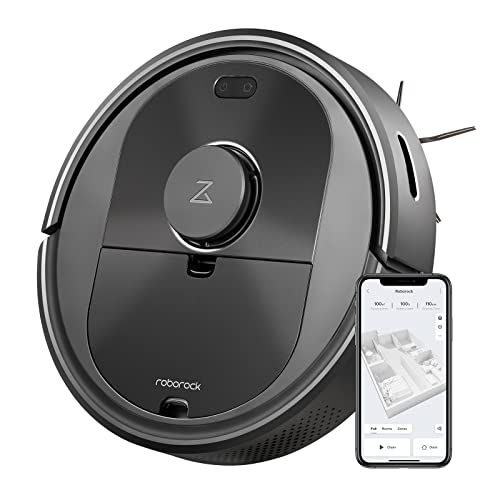
If you're searching for a top robotic vacuum that is equipped with the latest technology, then consider getting one that is equipped with Lidar navigation. It has numerous advantages, including a shorter time to run and more thorough cleaning.
Lidar is an advanced technology for remote sensing that emits laser beams to measure distances accurately. It also works in dim or strong light environments.
Cost
The nature of the navigation system in the robot vacuum is an important factor in deciding on which model to buy. Most robots use a combination sensors to navigate and map their environment. Cameras provide visual information, while optical sensors measure distances. The combination of these two technologies allows the robot to move more efficiently and accurately.
Compared to previous generation of robot vacuums which relied on simple bump sensors and other sensors to avoid obstacles the lidar-navigated robots are much more efficient when it comes to navigating difficult environments. These robots can identify and navigate around smaller objects, intricate furniture arrangements, and low-lying obstacles. They also have an organized approach to cleaning, which means they can complete a room's cleaning more quickly and efficiently.
A robot that has lidar is a fantastic tool, but it's costly. The best robotic vacuums that utilize lidar make use of a method called SLAM, which creates a map of the surrounding environment and tracks where the robot is located. These robots are able to interact with their maps in a variety of ways, such as setting up no-go zones and the removal of virtual boundaries. They can also navigate at night if needed.
The main drawback of a robot with lidar is that it can have trouble detecting reflective or transparent surfaces like glass and mirrors. This can result in the robot becoming stuck or moving in an unexpected direction. This can be fixed by adjusting robot sensitivity settings. Lidar navigation may be less accurate in dimly lit rooms and can be confused by light reflections on the floor or wall.
Gyroscopes that measure the speed of the robot's rotation can prevent the robot from bumping into things and creating precise maps. They can also be used to calculate the angles of a room and detect obstacles. Gyroscopes can be purchased for cheap prices and are included in the majority of models.
Some of the top robot vacuums with navigation make use of lidar, in conjunction with vSLAM. vSLAM makes use of optical sensors to scan a room's ceiling and major objects. The resulting maps allow the robot to efficiently plan its route and avoid obstacles.
Accuracy
The system of navigation employed by a robot vacuum can make a significant difference in how well it navigates around and cleans. The most efficient navigation systems utilize Lidar or SLAM (Simultaneous Localization and Mapping). However, they also cost more than other forms of navigation, such as gyroscopes or cameras. You must decide if the additional cost is worth the investment to have navigation capabilities.
Lidar is a form of remote sensing which uses lasers to measure the distance. It is often utilized in self-driving vehicles to locate objects in the surrounding. Robots with this technology are able to create precise room maps and dodge obstacles with pinpoint accuracy. Additionally, they are able to navigate more quickly than robots that rely on different sensors.
Like optical sensors, lidar is not affected by lighting conditions or shadows. However, it can have issues detecting transparent or reflective surfaces. For instance, a mirror or glass coffee table could reflect the laser beam back to the sensor, causing mistakes in navigation and mapping. Camera technology and lasers can mitigate these issues.
Another limitation of lidar is that it will not accurately detect low-lying or hidden objects. This is the reason why it's not the best choice for homes or cluttered spaces with lots of obstacles. To overcome this issue manufacturers have created an option called "floor mapping" which allows the robot to map the floor in real-time. This feature reduces the likelihood of hitting furniture and it can assist the robot in finding a path that is safe for both the robot and the furniture.
If you can afford it, a robot equipped with lidar navigation will give you the most precise and efficient navigation. The technology works by emitted a laser beam, and determining the time it takes to get the beam to the sensor. This data is used to determine the distance between the objects. The data is then compiled into a map of the area. In addition this technology can be used to pinpoint areas that are cluttered and to determine where dust accumulates most frequently.
Complexity of Space
The more complicated your home, the more important it is to select a robot cleaner that is able to navigate. The most affordable models have collision sensors to prevent them from hitting objects, but they're not great at navigating obstacles such as chair legs, dustbins and wires. cheapest robot vacuum with lidar robotvacuummops.com are also unable to navigate around books, socket extensions, or other obstacles. Robots with lidar navigation can easily avoid these objects and provide a more thorough cleaning.
Lidar navigation generates maps of the surrounding environment using a spinning laser hidden under the cap that is on top of the robot. These sensors can measure the distance of objects to within one centimeter by spinning at a lightning speed and determining how long it takes for the laser to reflect back onto itself. This allows the robot to get a better understanding of its surroundings.
One disadvantage of this technology is that it may fail to detect transparent or reflective objects, which makes the process of mapping and navigation less precise. A camera can be used in conjunction with a lidar camera to solve this issue. Some models also incorporate wall sensors that prevent the robot from pinging off furniture or walls and making noise or causing damage.
Both camera navigation and lidar systems have their advantages, but they can be improved with advanced algorithms. Both technologies work to make the best robots.
The best robot vacuums can create multiple maps with high-quality detail and store them in memory and navigate with greater precision. They also have an easier interface for setting no-go zones as well as other restrictions. They can even connect to voice-activated assistants, and work in darkness. They also have more suction power than competitors and can clean floors in a much shorter period of time. These advantages make them a good choice for busy families with limited time. The high cost of robots that have lidar capabilities means they are not suitable for all households.
Time is an important factor.
The technology for navigation used by your robot vacuum can influence the time it takes to complete a task. The simplest robots depend on gyroscopes to measure the speed of the wheels to determine distances between them and obstacles. These sensors have been used in ships, aircrafts and cell phones for many years and are effective in cutting down on cleaning time. However, they're not very precise when it comes to navigating around furniture and other objects.
vSLAM, which stands for visual simultaneous localization and map-making and lidar (light detection and range) are two of the most advanced navigation technologies. vSLAM makes use of sensors to scan the ceiling, furniture, and walls of the room. The lidar system utilizes laser beams to reflect off objects and walls. The sensors can detect changes in reflected light and create maps of a room, which can increase the accuracy of navigation.
Lidar is a very advanced navigation system that can be used both indoors and outdoors. Its ability map the space allows robots to navigate more efficiently and avoid obstacles. It is effective in low-light conditions. It also has higher accuracy than other navigation methods and is more efficient with battery usage.
Another advantage of lidar is that it can provide more precise information about an object's surface like whether it is smooth or rough. This helps the robot to avoid damaging or clogging furniture. It is also able to search for objects that could be blocking the path of vacuum, including chair legs, dustbins and toys and extension cables, sockets, and other objects.
Lidar is a better alternative to the traditional radar which can only detect stationary objects. It can also detect changes in the environment as well as moving objects. This makes it perfect for homes that are constantly changing. It can also measure the height of objects, which enables it to get around lower cabinets and reach difficult-to-access areas. It is important to keep in mind however that some privacy experts believe these maps stored by robots could be hacked to expose sensitive information, such as the size of a person's home, their income and their life style.